Bichitr painted himself into his emperor's dream
The boldest signature in the tradition is not written. It is a self-portrait, smuggled into an allegory of imperial glory.
Aurah Living · September 2026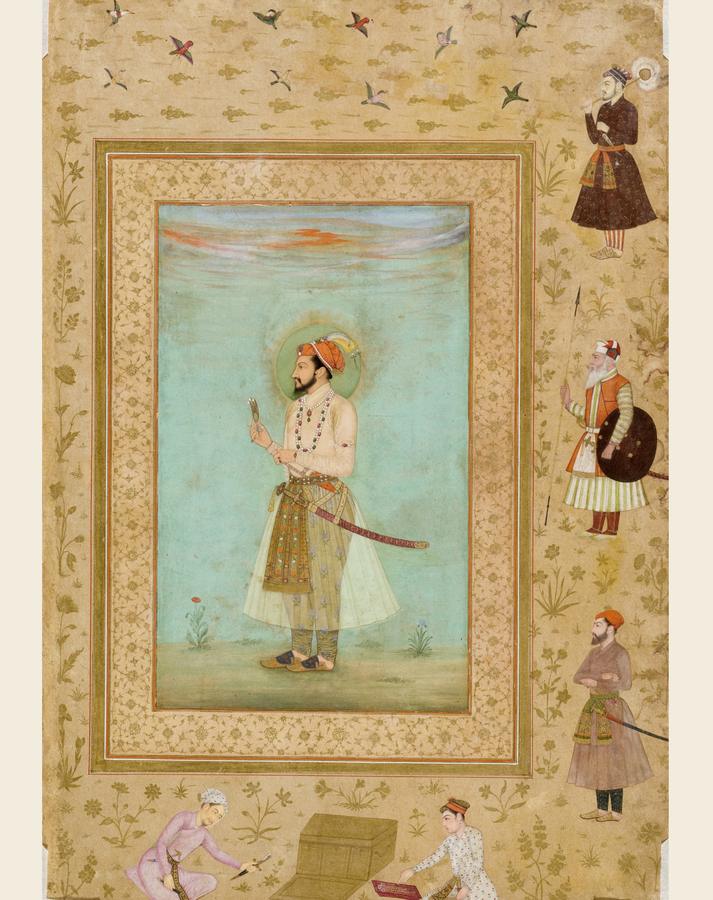
Around 1615–18, Bichitr painted Jahangir enthroned on an hourglass — time itself as furniture — turning away from kings to hand a book to a Sufi shaikh. Below the shaikh wait an Ottoman sultan and King James I of England, copied from a European portrait the studio had to hand. And below the King of England, last in line, stands a small man in a yellow jama holding a painting: Bichitr, by Bichitr.
The miniature he holds shows a painter presenting a painting. His signature sits on the emperor's footstool — where the imperial foot would land. Read one way, perfect humility. Read the other, a painter placing himself in the same frame as emperors and kings, permanently. Both readings are true, and the tension is the point.
The portrait above is attributed to the same hand. Bichitr's own face we know only because he told us — from the corner of a dream he was hired to paint.
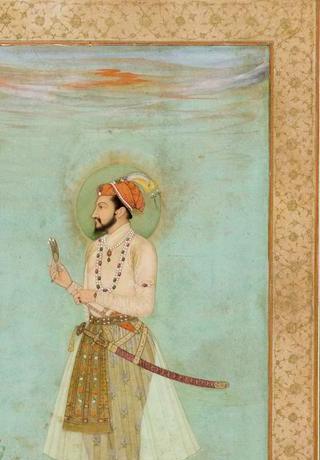
The standing portrait, as a framed print — aurahliving.com